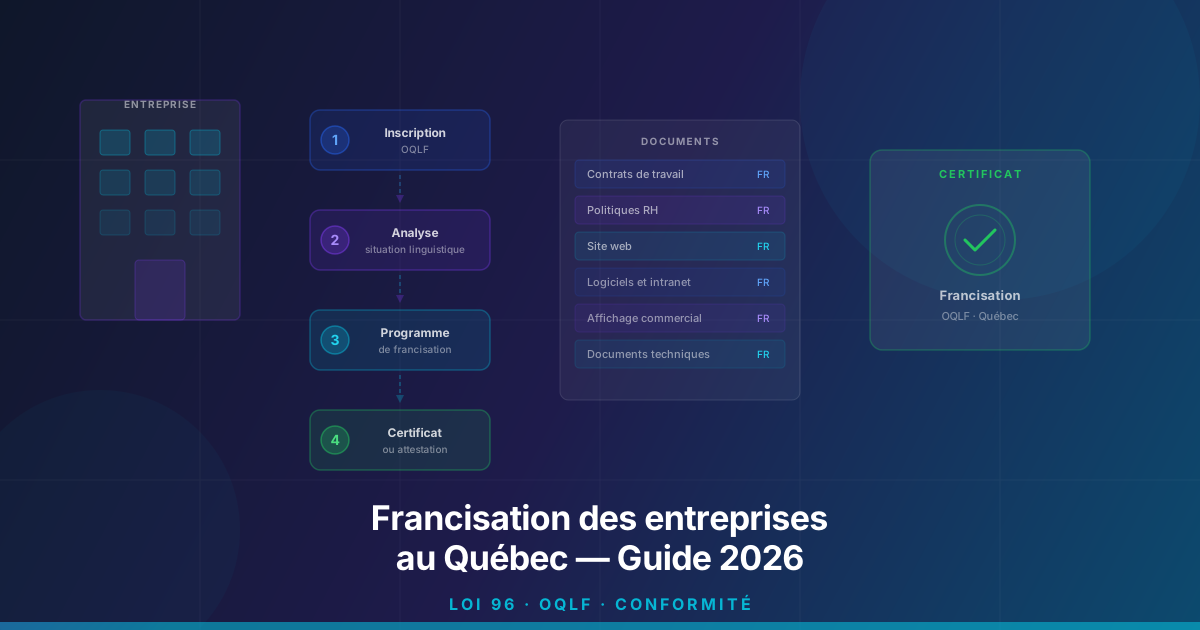
Quebec Business Francization in 2026: Bill 96, OQLF, Steps and Compliance Obligations
2026 guide to Quebec business francization: OQLF obligations, registration, language analysis, francization program, certificate and translation needs.
In Quebec, businesses employing 25 or more people for a period of six months must register with the Office québécois de la langue française (OQLF) and undertake a francization process. This process aims to ensure that French is used at every level of the business, and professional translation often plays a central role.
In brief — Businesses employing 25 or more people in Quebec for a period of six months must register with the OQLF to undertake a francization process. This may include analysing the company's language situation, preparing a francization program when the use of French is not sufficiently widespread, and then obtaining an attestation or certificate as applicable. Professional translation of HR, commercial, legal, technical, and digital documents can be a key component of compliance.
What Is Business Francization in Quebec?
Business francization is a process governed by the Charter of the French Language (Charte de la langue française). Its purpose is to ensure the widespread use of French at every level of a business operating in Quebec: internal and external communications, documentation, work tools, signage, and services.
The OQLF is the organization responsible for overseeing this process. It supports businesses in assessing their language situation, determines whether the use of French is sufficiently widespread, and, where needed, guides businesses through a francization program.
Key points:- francization goes beyond translating documents — it covers the entire work environment;
- the process applies regardless of the language used by management or the location of the head office;
- francization is an ongoing process, not a one-time exercise.
What Is Bill 96, and Why Is It Also Called Law 14?
Bill 96, tabled in 2021 and enacted on June 1, 2022, is officially the Act respecting French, the official and common language of Québec (Loi sur la langue officielle et commune du Québec, le français). After adoption, it became chapter 14 of the laws of 2022, which is why it is sometimes referred to as "Law 14" or "Loi 14" in legal contexts.
This law amends the Charter of the French Language in several key areas:
- lowering the francization threshold from 50 to 25 people;
- strengthening obligations related to employment contracts, communications, and signage;
- expanding the powers of the OQLF;
- adding provisions concerning trademarks and websites.
The full legislative context is available on the Quebec government's website.
Note: in this article, "Bill 96" and "Law 14" refer to the same legislation. "Bill 96" remains the most commonly used term in everyday language.Which Businesses Must Register with the OQLF?
Since June 1, 2025, the threshold for mandatory francization registration is set at 25 people employed in Quebec for a period of six months. This threshold was previously 50 people.
| Business size in Quebec | General obligation | Key consideration |
|---|---|---|
| Fewer than 25 people | No francization process based on the 25-person threshold | Other language obligations may apply (contracts, signage) |
| 25 to 49 people | Registration with the OQLF if the threshold is reached for six months | New threshold in effect since June 1, 2025 |
| 50 to 99 people | Structured francization process | Analysis and follow-up per OQLF directives |
| 100 or more people | More extensive organizational obligations | Francization committee required under the Charter |
- the count includes people employed in Quebec, regardless of their employment category;
- a business with its head office outside Quebec is subject to these requirements if it employs the required number of people in Quebec;
- the specific obligations based on company size and situation should be verified with the OQLF.
What Are the Steps in a Francization Process with the OQLF?
The francization process follows a structured path. The steps and their sequence may vary depending on the size of the business and its language situation.
1. Business registrationThe business registers with the OQLF through the OQLF Portal. The registration requires information about the business, the number of people employed, and activities in Quebec.
2. Registration attestationAfter processing the application, the OQLF issues a registration attestation.
3. Analysis of the language situationWithin three months of receiving the attestation, the business must submit an analysis of its language situation to the OQLF. This analysis evaluates the use of French in communications, documents, work tools, and services.
4. OQLF determinationThe OQLF reviews the analysis and determines whether the use of French is sufficiently widespread.
5. Francization program (if required)If the OQLF determines that the use of French is not sufficiently widespread, the business must develop and adopt a francization program to address the gaps identified.
6. Implementation and follow-upThe business implements the measures in the program and submits follow-up reports to the OQLF as directed.
7. Attestation or francization certificateWhen the OQLF determines that French is used at every level of the business, it issues a francization certificate. Compliance must be maintained over time.
Important: OQLF processing times and the duration of each step may vary. Check the current guidelines with the OQLF.What Documents and Content Must the Business Analyse or Translate?
The language analysis covers a broad range of documents and systems. Key categories include:
- employment contracts — a French version must be available and provided first to employees in Quebec;
- HR policies — employee handbooks, codes of conduct, remote work policies, leave policies, disciplinary policies;
- internal communications — company-wide emails, newsletters, management announcements;
- training materials — training documents, onboarding guides;
- software, intranet, ERP, CRM — work tools must be accessible in French where a French equivalent exists;
- website — content aimed at the Quebec market should be available in French;
- commercial documents — quotes, contracts, invoices, terms and conditions;
- signage — internal and external signage, safety notices;
- technical documents — user manuals, specifications, instructions;
- legal documents — confidentiality clauses, agreements, powers of attorney.
What Rules Apply to Commercial Signage, Websites, and Trademarks?
The Charter of the French Language includes provisions on public and commercial signage, trademarks, and online presence.
Public and commercial signage:French must be present on public and commercial signage in Quebec. When other languages are used, French must be markedly predominant according to the applicable rules.
Trademarks:Registered trademarks may be displayed in their original language, but descriptive or generic terms accompanying them must be in French.
Websites:Websites targeting the Quebec market should offer content in French. The specific requirements regarding predominance and French-language versions should be verified with the OQLF.
Advice: these rules evolve and their application depends on context. Check the current OQLF directives and the Charter before making signage or publication decisions.See our article on website translation and localization.
What Penalties Can Apply for Non-Compliance?
The Charter of the French Language provides for penalties in cases of non-compliance with language obligations. These may include:
- fines that vary depending on the nature of the offence, the size of the business, and whether it is a repeat offence;
- orders or corrective measures;
- reputational risk related to complaints and investigations.
The OQLF can act on complaints or on its own initiative. The process is generally progressive: awareness, recommendations, then formal measures if necessary.
The amounts of fines and applicable penalties must be verified in the current version of the Charter of the French Language. Amounts published in other sources may not be current.What Timeline Should Businesses Keep in Mind for 2022–2026?
Bill 96 introduced a phased implementation. Here are the key milestones confirmed by official sources:
| Year | Milestone |
|---|---|
| 2022 | Enactment of the Act respecting French, the official and common language of Québec (Bill 96) |
| 2023 | Entry into force of several provisions, including OQLF registration for businesses with 50 or more people |
| 2025 | Threshold lowered to 25 people (June 1, 2025) |
| 2026 | Ongoing follow-up on francization processes, increased compliance expectations |
How Much Does a Francization Process Cost for an SME?
The total cost depends on the size of the business, the volume of documents, the number of systems to adapt, the working languages, signage needs, and training requirements.
| Cost category | Examples |
|---|---|
| Language audit | Inventory of documents, processes, and work tools |
| HR translation | Contracts, internal policies, employee handbook |
| Commercial translation | Quotes, commercial contracts, invoices, terms |
| Digital translation | Website, intranet, software interfaces |
| Legal review or compliance | Validation of sensitive texts by a specialized translator |
| Signage | Internal and external signage in French |
| Language training | Courses or internal language support |
What Common Mistakes Do Businesses Make?
Businesses starting a francization process for the first time often make the same mistakes:
- waiting too long before registering or starting translations;
- limiting francization to the website while neglecting internal documents, tools, and contracts;
- overlooking internal tools — software, platforms, CRM, intranet;
- neglecting HR documents — employment contracts, leave policies, performance reviews;
- confusing machine translation with compliance — HR, legal, commercial, and public-facing documents carry risks if not reviewed by professionals;
- not prioritizing high-risk documents — starting with low-impact documents instead of contracts or policies;
- not keeping evidence of the francization process (translated versions, dates, reports);
- not involving the right functions — HR, legal, marketing, operations, and IT should all be engaged;
- not verifying OQLF requirements specific to the company's size and sector.
How Can Asiatis Support a Francization Process?
Asiatis supports businesses with the documentary and linguistic dimension of their francization process:
- language document audit — inventory, gap identification, prioritization;
- professional translation and revision of all documents in scope;
- legal translation — employment contracts, confidentiality clauses, agreements, terms and conditions;
- HR translation — internal policies, employee handbooks, forms;
- marketing translation — commercial communications, promotional content;
- technical translation — manuals, specifications, instructions;
- website adaptation and localization for the Quebec market;
- terminology consistency across all company documents;
- documentary support to prepare exchanges with the OQLF.
Asiatis is a translation and documentary support partner. For legal questions related to francization, consult a legal advisor.
For a personalized quote, contact us. See also our business francization service page, our certified translation page and our article on why certified legal translation matters.
FAQ
My business has fewer than 25 people in Quebec. Am I concerned by francization?
The business is not subject to the francization process based on the 25-person threshold. However, other language obligations may apply, particularly regarding individual employment contracts and French-language signage. Check your situation with the OQLF.
What is the difference between Bill 96 and Law 14?
Bill 96 became an enacted law in June 2022, officially known as chapter 14 of the laws of 2022, or the Act respecting French, the official and common language of Québec. Both names refer to the same legislation.
Is a federally regulated business in Quebec affected?
Certain language obligations may apply depending on the legal framework and industry. The situation of federally regulated businesses regarding the French language in Quebec is complex. It is advisable to check with official sources or a legal advisor.
Do I need to translate all my internal documents?
Not necessarily all at once. The goal is to identify documents used in the workplace, communications, contracts, tools, and services offered in Quebec, and make them available in French. Prioritization depends on risk and usage.
Is an English-only website compliant?
It depends on the target audience and the content. If the website targets the Quebec market, a French version may be required. The specific rules should be verified with the OQLF.
Can I use DeepL or ChatGPT for francization?
These tools can help prepare drafts, but HR, legal, commercial, technical, and public-facing documents carry risks if not reviewed by professionals. Unreviewed machine translation may contain terminological, legal, or contextual errors that could affect the document's compliance.
Is the francization certificate permanent?
Compliance must be maintained over time. The francization certificate may be subject to follow-up by the OQLF. The follow-up obligations should be verified with the OQLF.
What penalties are possible?
Penalties may apply for non-compliance with the obligations set out in the Charter of the French Language. The amounts and measures must be verified in the current version of the Charter.
Does an English-language trademark need to be translated?
Registered trademarks may be displayed in their original language, but descriptive or generic terms accompanying them must be in French. The exact rules depend on the display context. Check the OQLF's directives.
Can Asiatis prepare the translations needed for francization?
Yes. Asiatis can translate, revise, and harmonize the HR, commercial, legal, technical, and digital documents needed for a francization process. Asiatis is a translation partner, not a law firm. Contact us for a personalized quote.
---
For professional documentary support for your francization process, contact us. See also our business francization service page, our certified translation page, our article on why certified legal translation matters, and our pricing guide.
Get a Free Quote
Our certified translators are ready to help. Response within 2 hours.
Request a Quote →Related articles
Bill 96 Checklist for U.S. Exporters Selling into Quebec (2026)
A practical Bill 96 checklist for U.S. companies selling into Quebec: packaging, labels, websites, ads and trademarks — what French is required, and the fines for getting it wrong.
Why U.S. Companies Choose a Canadian Translation Agency in 2026
Canadian French ≠ France French. Why U.S. companies hire a Canadian translation agency: native Quebec French, Bill 96 compliance, CAD billing and nearshore time zones.