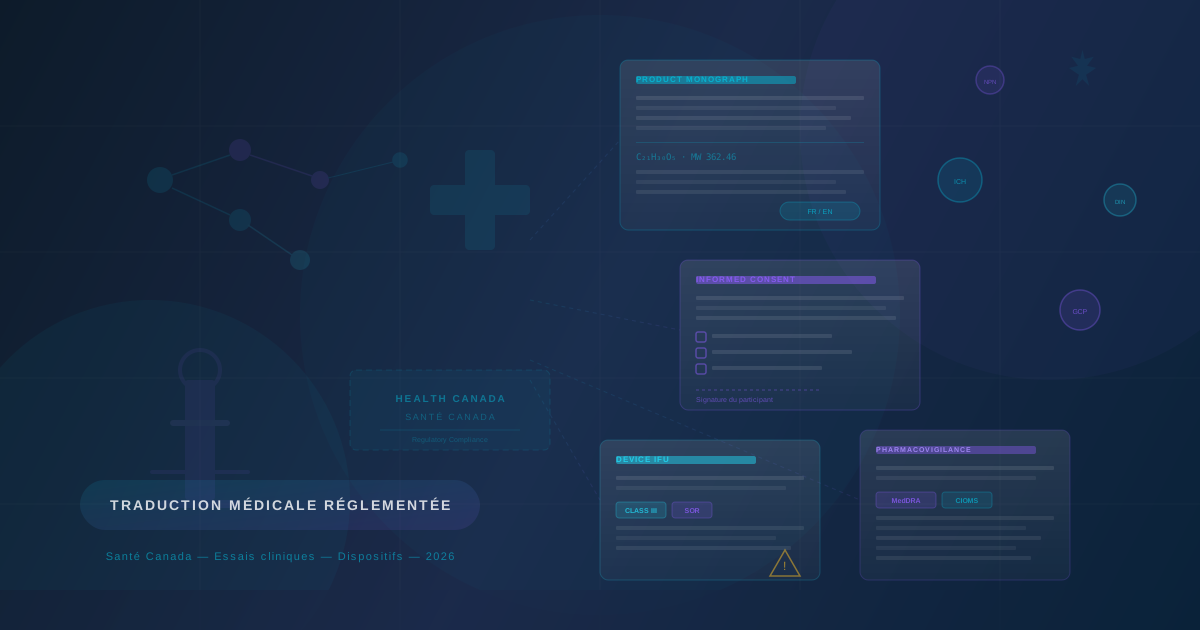
Regulated Medical Translation in Canada in 2026: Health Canada, Clinical Trials and Medical Devices
Professional guide to regulated medical translation in Canada: Health Canada submissions, clinical trials, medical devices, product monographs, pharmacovigilance and language compliance.
Regulated medical translation in Canada covers documents produced, submitted, or used within a framework governed by Health Canada, research ethics boards, medical device manufacturers, clinical trial sponsors, and pharmaceutical companies. This guide explains the document categories involved, the applicable regulatory frameworks, and the linguistic quality requirements expected for the Canadian market.
In brief — Regulated medical translation in Canada covers product monographs, pharmaceutical labelling, informed consent forms, medical device technical documentation, pharmacovigilance, scientific publications, and patient communications. Unlike general medical translation, it requires controlled terminology, document traceability, specialized reviewers, and an understanding of Canadian and Quebec language obligations. For organizations active in Canada, the right provider is not just a translator — it is a linguistic, terminological, and documentary compliance partner. Asiatis supports multinational pharmaceutical companies, medical device manufacturers, university hospitals, and research centres via its regulated medical translation services for Health Canada, with FR-CA, EN-CA, and multilingual coverage.
Why is regulated medical translation different from general medical translation?
General medical translation covers a broad range: patient brochures, educational articles, healthcare marketing materials, internal hospital documents. Regulated medical translation, on the other hand, deals with documents that fall within a specific regulatory framework — typically that of Health Canada, the Food and Drugs Act, or the Medical Devices Regulations.
What distinguishes regulated medical translation:- controlled terminology — terms used in a product monograph, informed consent form, or medical device instructions for use must be consistent across language versions and compliant with official guidelines;
- document traceability — versioning, dedicated translation memories, modification history. A pharmaceutical product marketed for 15 years accumulates hundreds of document versions;
- confidentiality — clinical data, proprietary formulations, and submission strategies are protected by non-disclosure agreements (NDAs);
- specialized review — the translation is reviewed by a professional with knowledge of the therapeutic area, the regulatory framework, and official terminology;
- risk impact — an error in an informed consent form or a medical device notice can have consequences for patient safety, regulatory compliance, and corporate liability.
A well-executed regulated medical translation can help reduce the risks of submission rejection, clarification requests from Health Canada, or delays in market authorization.
What are the main types of regulated medical documents to translate in Canada?
The Canadian regulated medical translation market covers a wide range of documents. Their risk level and quality requirements vary depending on the recipient and intended use.
| Document type | Typical client | Use | Risk level |
|---|---|---|---|
| Product monograph | Pharma, biotech | Submission and professional information | High |
| Labelling and packaging | Pharma, OTC, devices | Canadian market authorization | High |
| Informed consent form | CRO, sponsor, hospital | Clinical trial | Very high |
| Instructions for use (IFU) | Medical devices | Professional or patient user | High |
| Pharmacovigilance reports | Pharma | Post-market safety | Very high |
| Patient brochures | Hospitals, associations | Health information | Medium to high |
| Scientific publications | Research, foundations | Scientific dissemination | Medium |
| Clinical practice guidelines | Professional associations | Training and standards | High |
Which pharmaceutical documents require particular linguistic attention for Health Canada?
Health Canada oversees the authorization and surveillance of drugs, natural health products, and biologics in Canada. Several types of documents submitted or associated with regulatory submissions require particular linguistic attention.
Product monograph: this is the reference document describing an authorized drug in Canada — its indications, dosage, adverse effects, contraindications, and pharmacology. Health Canada's product monograph guidance specifies the expected format and content. Terminological consistency between the English and French versions is essential. See our product monograph translation page. Pharmaceutical labelling: drug labelling for human use in Canada is governed by the Food and Drugs Act and the Food and Drug Regulations. Language requirements vary depending on the product, regulatory category (DIN, NPN, DIN-HM), document type, and intended audience. Patient information: patient information accompanying a drug must be understandable in the appropriate official language. These documents use a readability level adapted for the general public. Natural health products: products bearing a Natural Product Number (NPN) have their own labelling and documentation requirements. Note: language requirements are not identical for all products and regulatory categories. The applicable Health Canada guidelines must always be verified at the time of submission. For technical aspects of translation, see our technical translation page.How to translate informed consent forms and participant documents for clinical trials?
Clinical trials in Canada are governed by Division 5 of the Food and Drug Regulations, by Health Canada guidance on clinical trial applications, and by the principles of Good Clinical Practice (ICH E6).
The informed consent form is the most sensitive document in the participant file. It must inform the participant in a comprehensible manner, in the language appropriate to the site and protocol, before they agree to participate in the trial. Language requirements for informed consent:- the document must be written in a language understandable to the participant;
- in Quebec, consent forms for French-speaking participants are generally required in French. The local research ethics board (REB) determines the exact requirements;
- in Quebec, certain research involving minors or persons unable to give consent is also subject to specific rules, including provisions of the Quebec Civil Code. The exact requirements must be validated with the responsible ethics board;
- forms use an appropriate readability level — plain language, short sentences, clear explanations of risks and benefits.
- participant information letters;
- study brochures;
- patient questionnaires (PRO, ePRO);
- visit instructions;
- pocket cards or patient cards;
- protocol summary for participants.
For the contractual aspects of CRO-sponsor agreements, see our article on legal translation for law firms and notaries.
What precautions apply when translating medical device documentation (Classes I to IV)?
The Medical Devices Regulations (SOR/98-282) classifies medical devices into four classes, from I (lowest risk) to IV (highest risk). Documentation and labelling requirements increase with the class.
Typical documents to translate:- instructions for use (IFU);
- user guides and technical manuals;
- device and packaging labelling;
- safety documentation and warnings;
- technical data sheets;
- incident reports and safety notices;
- medical device licence application documentation.
- the device classification determines the level of documentation required;
- in vitro diagnostic devices (IVDs) have specific documentation requirements;
- recalls and safety notices must be communicated promptly in both official languages, according to regulatory requirements;
- devices sold in Quebec are also subject to Bill 96 language requirements, in addition to federal requirements.
See our pharmaceutical and medical devices translation page.
Why is MedDRA and CIOMS terminology critical in pharmacovigilance?
Post-market pharmacovigilance involves monitoring the safety of a drug after it has been authorized for sale. It relies on standardized reporting systems that use very precise terminology.
MedDRA (Medical Dictionary for Regulatory Activities): this is the international medical dictionary used to code adverse events, indications, and medical terms in pharmacovigilance reports. Consistency between MedDRA language versions is essential — a terminological variation can lead to a coding error and distort safety signal tracking. CIOMS (Council for International Organizations of Medical Sciences): the CIOMS form is the standard format for Individual Case Safety Reports (ICSRs). Its translation requires knowledge of the format, regulatory fields, and MedDRA terminology. Pharmacovigilance documents to translate:- Individual Case Safety Reports (ICSRs);
- Periodic Safety Update Reports (PSUR/PBRER);
- Dear Healthcare Professional Letters;
- recall or safety notices;
- risk management plans;
- pharmacovigilance summaries.
The exact requirements for notification and pharmacovigilance report writing must be validated with internal regulatory teams and the marketing authorization holder's pharmacovigilance procedures.
What content needs translation for hospitals, medical associations, and research centres?
Beyond the pharmaceutical and medical device sectors, regulated medical translation also covers healthcare institutions, professional associations, and research centres.
University hospitals and health networks:- clinical protocols and practice guidelines;
- internal consent forms;
- patient communications in both official languages;
- continuing medical education (CME) materials;
- documents for allophone communities — beyond English and French, some institutions need translations in Arabic, Mandarin, Spanish, Haitian Creole, or other languages, depending on the patient populations served.
See our hospital solutions page.
Medical professional associations:- clinical practice guidelines;
- accredited training programs;
- newsletters and member communications;
- official position statements and policy papers.
- scientific articles and research publications;
- grant applications;
- research reports;
- scientific communication for general audiences.
See our research and scientific publications page.
Asiatis works with Canadian university hospitals, national medical professional associations, university research centres, and medical foundations, without identifying client institutions.
How to choose a regulated medical translation provider in Canada?
Choosing a regulated medical translation provider is not based on price alone. Here are the criteria to evaluate:
| Criterion | Why it matters |
|---|---|
| Translators specialized in health and life sciences | Reduces terminological errors in regulatory documents |
| Independent medical or scientific review | Secures high-risk documents |
| FR-CA and EN-CA proficiency | Essential for language compliance in Canada and Quebec |
| Dedicated translation memories per client | Terminological consistency over multiple years and submissions |
| Confidentiality and NDAs | Protection of sensitive clinical and strategic data |
| Documented quality process | Traceability, versioning, and deliverable archiving |
| Multilingual capacity | Required for multinational sites and allophone patients |
| Reliable B2B timelines | Important for regulatory submissions and urgent audits |
For pricing information, see our certified translation pricing guide. To understand the difference between certified and sworn translation, see our dedicated article.
What quality workflow should be adopted for recurring medical translations?
For clients managing recurring volumes of regulated medical documents, a structured workflow is recommended:
1. Document type and risk qualification. Each document is classified by risk level (informed consent = very high; patient brochure = medium-high; internal communication = medium). The translation and review process is adapted accordingly. 2. Client glossary creation. The glossary captures terms approved by the client for each product, therapeutic area, and document type. It is updated with each new project. 3. Dedicated translation memory setup. The translation memory (TM) stores translated and approved segments. It ensures terminological consistency across successive versions of the same document and across documents for the same product. 4. Translation by a domain specialist. The translator assigned to the project has experience in the relevant therapeutic area (oncology, cardiology, orthopedics, etc.). 5. Independent review. The translation is reviewed by a professional different from the initial translator. For high-risk documents, an additional medical or scientific proofread may be recommended. 6. Versioned delivery and archiving. Each deliverable is named according to a naming convention agreed upon with the client, versioned, and archived. Traceability is maintained for regulatory audits. Additional best practices:- single point of contact at the provider for each recurring client;
- monthly or per-project billing depending on volume;
- periodic reports on new terms, detected inconsistencies, and volumes processed;
- enhanced confidentiality for pre-authorization submission data.
For risks related to approximate technical translation in industrial or medical contexts, see our dedicated article.
How does Asiatis support medical, pharmaceutical, and medtech organizations in Canada?
Asiatis has supported organizations in the medical, pharmaceutical, and medical device sectors since 2000, with offices in Montreal, Paris, and Singapore.
Experience segments:- multinational pharmaceutical companies;
- medical device manufacturers;
- Canadian university hospitals;
- national medical professional associations;
- university research centres;
- medical foundations;
- international humanitarian organizations;
- digital health and medical technology companies;
- dental and orthodontic product manufacturers.
- translators specialized in health and life sciences, in FR-CA, EN-CA, and over 40 languages;
- client glossaries and dedicated translation memories;
- review process adapted to the risk level;
- strict confidentiality — no client named without written authorization;
- ability to manage recurring projects over multiple years;
- rapid quoting after file review.
No client is identified in this article. The categories above reflect Asiatis's aggregated experience without constituting a nominative reference.
To start a project, contact us to discover our regulated medical translation services for Health Canada. See also our certified translation page and our legal translation page.
FAQ
What is the difference between medical translation and regulated medical translation?
Medical translation covers a broad range: educational content, healthcare marketing, internal documents. Regulated medical translation concerns documents governed by a specific regulatory framework — Health Canada submissions, informed consent forms, pharmaceutical labelling, medical device documentation, pharmacovigilance. It requires controlled terminology, traceability, and often specialized review.
Does medical translation always require OTTIAQ certification?
No. The certification requirement depends on the recipient and document type. Some regulatory documents do not require formal certification, while others — particularly legal documents or official submissions — may require it. OTTIAQ is the most natural choice for documents intended for Quebec, but other recognized Canadian provincial associations (ATIO, STIBC, ATIA) exist as well.
Does Health Canada always require bilingual documents?
Health Canada's language requirements vary by product, regulatory category, document type, and intended audience. It should not be assumed that all documents must systematically be bilingual. The applicable guidelines must always be verified at the time of submission.
Can you translate informed consent forms for clinical trials?
Yes. Asiatis translates informed consent forms, participant letters, study brochures, and other patient-facing documents for clinical trial sponsors, CROs, and hospital centres. FR-CA adaptation and readability level are essential components of the process.
What terminology do you use for pharmacovigilance?
For pharmacovigilance, we use MedDRA terminology in the applicable language version. Our translators are familiar with the CIOMS format, ICSR reports, and the historical consistency requirements of pharmaceutical products.
Do you work with medical device manufacturers?
Yes. Asiatis works with medical device manufacturers across different classes. We translate instructions for use (IFU), user guides, labelling, safety notices, and technical documentation. See our pharmaceutical and medical devices page.
How do you ensure confidentiality for sensitive medical documents?
Every project is covered by non-disclosure agreements (NDAs). Documents are transmitted through secure channels. Translators are bound by confidentiality obligations. We never share client data with unauthorized third parties.
Can you maintain a client glossary over several years?
Yes. For recurring clients, we maintain dedicated glossaries and translation memories that evolve with each project. This ensures terminological consistency over the lifecycle of a product or clinical program.
Do you also translate documents for allophone patients?
Yes. Beyond English and French, we translate patient documents into languages such as Arabic, Mandarin, Spanish, Portuguese, Vietnamese, and others, depending on the patient populations served. See our article on Chinese, Mandarin, and Cantonese translation in Canada.
How do I start a regulated medical translation project with Asiatis?
Contact us with a description of the project, the type of documents to translate, source and target languages, and desired timeline. We review the files, identify the appropriate translator profile, and provide a detailed quote.---
For regulated medical translation support in Canada, contact Asiatis. See also our medical and pharmaceutical translation page, our hospital solutions page, and our research and scientific publications page.
Get a Free Quote
Our certified translators are ready to help. Response within 2 hours.
Request a Quote →Related articles
Bill 96 Checklist for U.S. Exporters Selling into Quebec (2026)
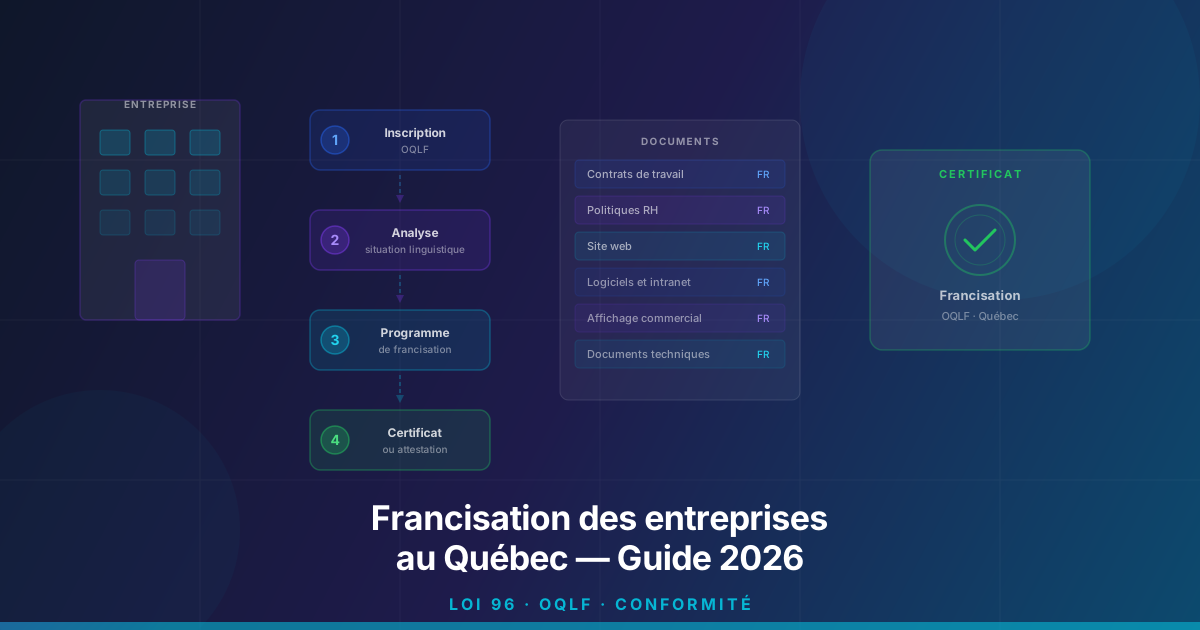
A practical Bill 96 checklist for U.S. companies selling into Quebec: packaging, labels, websites, ads and trademarks — what French is required, and the fines for getting it wrong.
Why U.S. Companies Choose a Canadian Translation Agency in 2026
Canadian French ≠ France French. Why U.S. companies hire a Canadian translation agency: native Quebec French, Bill 96 compliance, CAD billing and nearshore time zones.